2 July 2026
How to record your grandmother’s life story
You don’t need a studio or a journalist’s skill. Just a little presence, and a way to keep what gets said.
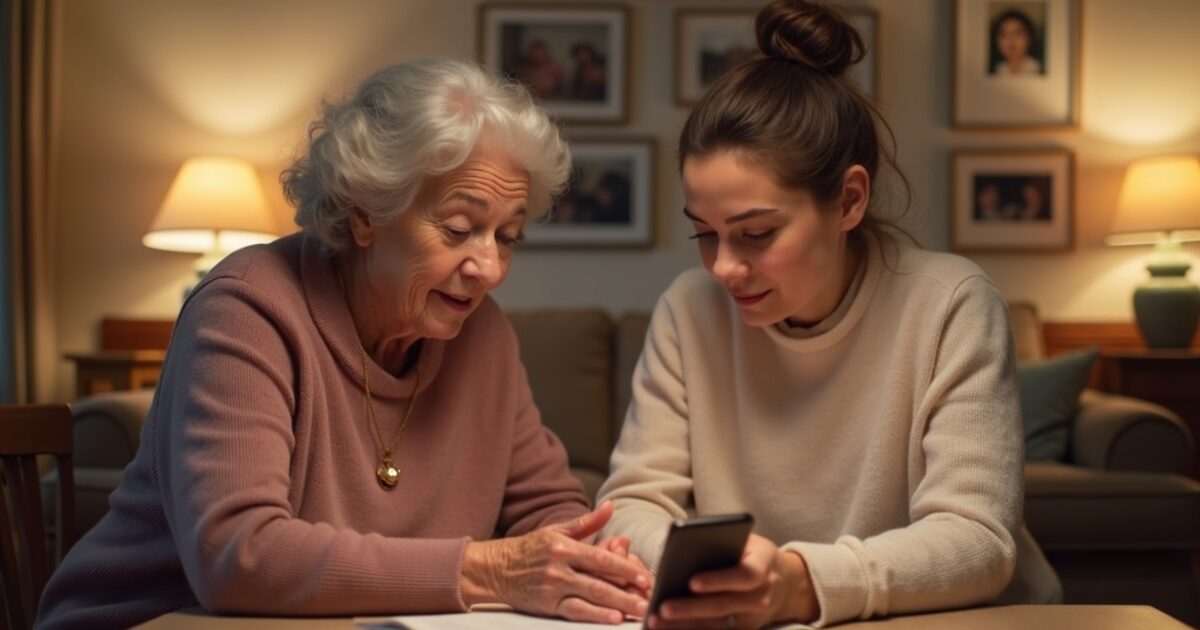
We put this off because we picture it as complicated: equipment, editing, hours of interviews. In reality, recording your grandmother’s life story fits in a phone and one afternoon. The hard part is not technical. It is sitting down and starting.
Pick the right time and place
Sit where she feels at home: her kitchen, her armchair, the table where she served a thousand meals. A familiar place loosens the words. Avoid tired moments (often the end of the day) and turn off the television. Bring a drink, and plan a short session rather than a marathon.
What to record with
- A phone is enough. The voice-memo app captures speech very well. Set the phone a metre away, microphone clear.
- Video is a bonus, not a requirement. Many older people speak more freely without a camera. Audio keeps what matters: the voice, the rhythm, the laugh.
- Test for thirty seconds before you start, to check the sound.
- Tell her you are recording, and why. "I want to keep your stories for the children." That reason puts her at ease.
The real technique: be quiet, and listen
Most people talk too much. Your job is not to run an interrogation, but to open doors and let things come. A few principles:
- One question, then silence. The best memories arrive after a pause. Do not fill the gap.
- Start from a photo or an object. "Where was this taken?" opens more than an abstract question. (See our questions to get started.)
- Follow the tangents. When she drifts off topic, do not pull her back: that is often where the treasure is.
- Do not correct the dates. You are gathering a voice, not a civil record.
- Nudge with "and then?", "how did you feel?", "tell me about that day."
The mistake almost everyone makes
You record a beautiful conversation, and then the file sits on the phone, forgotten, until the day the phone changes or breaks. A recording you never turn into something lasting eventually disappears. The goal is not just to capture, it is to keep, and to be able to share.
The best-recorded memory is worthless if it gets lost in a drawer.
Turn the recording into something that lasts
Once the conversation is captured, you can have it transcribed, put it in a shared folder, or turn it into a real story. That is what Memoira does: you talk, and the conversation becomes a written chapter of her life, in her own words, that the whole family can read and hear in her own voice. It is free during early access. Whatever method you choose, the point is to make the move today: start with a single conversation, this week.
Start their story today
Memoira turns a conversation into a real chapter of a life. Free during early access.
Try it freeKeep reading
StoryWorth alternatives in 2026: an honest comparison
I want to write a book about my life: the three honest paths

How to write your memoir when you’re not a writer

Questions to ask your grandparents before it’s too late

When Your Parent Says “My Life Wasn’t Interesting”: 9 Ways to Get Them Talking
What to do with your old family photos before they fade
Questions to ask your parents before it’s too late
What to say to a parent with Alzheimer’s: keeping the connection through memories
Gift ideas for aging parents or grandparents who already have everything